oXoo AI
The Global Assisted Reproductive Technology Market Size Was Valued at USD 27.3 Billion in 2023 and is Projected to Reach USD 46.5 Billion by 2032
The Global Assisted Reproductive Technology Market Size Was Valued at USD 27.3 Billion in 2023 and is Projected to Reach USD 46.5 Billion by 2032, Growing at a CAGR of 6.1% From 2024-2032.
Assisted Reproductive Technology (ART) encompasses sophisticated medical procedures, such as In Vitro Fertilization (IVF), Intracytoplasmic Sperm Injection (ICSI), and cryopreservation, designed to address infertility by facilitating conception outside the body. These technologies represent a critical solution for individuals and couples facing reproductive challenges due to factors like advanced maternal age, lifestyle changes, or underlying medical conditions. The principal advantage of ART over natural conception methods is the ability to enable parenthood for the infertile while also providing genetic screening capabilities (PGT) to lower the risk of passing on hereditary diseases.
The primary catalyst for market expansion is the growing global incidence of infertility, coupled with evolving societal acceptance of these treatments and changing demographics, including the increasing trend of delayed parenthood. As more governments offer supportive reimbursement policies and public awareness of treatment options grows, the demand for sophisticated ART procedures is escalating. Furthermore, continuous technological advancements, particularly in laboratory automation and cryopreservation protocols, are successfully improving the rates of live birth per cycle, solidifying ART's role as an essential and effective pathway to family planning worldwide.
👉 To request a sample report:
https://introspectivemarketresearch.com/request/17254
Market Segmentation
The Assisted Reproductive Technology Market is segmented into Type, End-User, and Product. By Type, the market is categorized into (In-Vitro Fertilization, Artificial Insemination, and Others). By End-User, the market is categorized into (Fertility Clinics, Hospitals & Surgical Centres, and Research Institutes/Cryobanks). By Product, the market is categorized into (Instruments & Equipment, Accessories & Disposables, and Reagents & Media).
Growth Driver
The Rising Global Infertility Rates and Shifting Family Planning Demographics serves as the principal growth driver. The surge in infertility, driven by factors like advanced parental age, high stress levels, and prevalence of conditions such as endometriosis, has created an urgent and expanding need for effective conception solutions. ART addresses this by offering high-efficacy treatments like IVF. This demand is further amplified by societal shifts, including the acceptance of single parenthood and same-sex couples seeking biological children, which increasingly rely on ART procedures, guaranteeing sustained market growth across all geographies.
Market Opportunity
A key market opportunity lies in the Integration of Artificial Intelligence (AI) and Machine Learning in the IVF Laboratory. AI-driven platforms are being rapidly adopted to improve embryo selection, predict implantation success, and standardize laboratory workflows. By analyzing complex morphological data from developing embryos, AI tools can objectively identify the most viable embryos, leading to higher success rates per cycle and reduced emotional and financial burden on patients. This focus on precision medicine and automation represents a high-value investment area for technology providers and clinic operators.
Detailed Segmentation
Title: Assisted Reproductive Technology Market, Segmentation Line below: The Assisted Reproductive Technology Market is segmented on the basis of Type, End-User, and Product.
Type
The Type segment is further classified into In-Vitro Fertilization, Artificial Insemination, and Others. Among these, the In-Vitro Fertilization (IVF) sub-segment is expected to hold the highest market share with around 93.5% in 2024. IVF dominates the market due to its high procedural success rates, broad applicability across various infertility causes, and decades of technological refinement. Continuous innovations, such as Intracytoplasmic Sperm Injection (ICSI), time-lapse imaging, and Preimplantation Genetic Testing (PGT), have cemented IVF as the gold standard for reproductive assistance. Furthermore, favorable insurance coverage and public acceptance in key markets contribute significantly to its overwhelming revenue share compared to other less invasive or complex procedures.
End-User
The End-User segment is further classified into Fertility Clinics, Hospitals & Surgical Centres, and Research Institutes/Cryobanks. Among these, the Fertility Clinics sub-segment is expected to hold the highest market share with around 78.5% in 2024. Fertility clinics are the dominant end-user due to their specialized infrastructure, dedicated expertise, and high volume of ART procedures. These centers are equipped with advanced laboratories, cryobanks, and trained embryologists, making them the primary destination for patients requiring complex ART treatments. The increasing global number of specialized clinics, often attracting medical tourism, further concentrates market revenue in this segment, far surpassing the share held by general hospitals or research institutes.
Some of The Leading/Active Market Players Are-
· Merck KGaA (Germany)
· CooperSurgical, Inc. (USA)
· Vitrolife AB (Sweden)
· Ferring Pharmaceuticals (Switzerland)
· FUJIFILM Irvine Scientific, Inc. (Japan)
· Cook Medical (USA)
· Genea Biomedx (Australia)
· Thermo Fisher Scientific (USA)
· IVIRMA Global (Spain)
· Anecova (Switzerland)
· Bloom IVF Centre (India)
· Hamilton Thorne Ltd. (USA) and other active players.
Key Industry Developments
In March 2025, Vitrolife AB announced the integration of advanced AI scoring algorithms into its time-lapse imaging systems to improve embryo selection accuracy. This development leverages machine learning to analyze morphological data from developing embryos, providing embryologists with objective, predictive analytics. The goal is to standardize the embryo assessment process across clinics, thereby significantly boosting implantation rates and reducing time-to-pregnancy for patients globally.
In February 2025, CooperSurgical, Inc. acquired a leading chain of regional fertility clinics in the Asia-Pacific region to expand its direct patient service offerings beyond laboratory products. This strategic move allows CooperSurgical to create integrated platforms that combine its advanced ART media and instruments with high-quality clinical care. This vertical integration is aimed at capitalizing on the rapidly growing demand for affordable ART services in emerging markets.
Key Findings of the Study
- Dominant Segments: IVF (Type) and Fertility Clinics (End-User) hold the largest shares.
- Leading Regions: Europe and North America maintain market leadership.
- Key Growth Drivers: Rising global infertility rates and delayed parenthood.
- Market Trends: Strong shift toward AI-driven embryo selection and laboratory automation.
🔍 𝐈𝐧-𝐃𝐞𝐩𝐭𝐡 𝐑𝐞𝐩𝐨𝐫𝐭:
https://introspectivemarketresearch.com/reports/assisted-reproductive-technology-market/
About Introspective Market Research
Introspective Market Research is a global provider of data-driven market intelligence and strategic advisory services. Our analysts and consultants deliver comprehensive reports, actionable insights and customized consulting to clients across chemicals & materials, healthcare, energy, environment, infrastructure, and advanced manufacturing sectors.
Media Contact:
Introspective Market Research.
Email: press@introspectivemarketresearch.com
Website: http://www.introspectivemarketresearch.com
Phone: ++91-91753-37569
الأقسام
إقرأ المزيد
"Competitive Analysis of Executive Summary Netherlands Insulation Market Size and Share CAGR Value The insulation market is expected to gain market growth in the forecast period of 2022 to 2029. Data Bridge Market Research analyses the market to grow at a CAGR of 5.7% in the above-mentioned forecast period. A competition that is getting higher day by day has kept many challenges in...

Polaris Market Research has introduced the latest market research report titled Krill Oil Market Share, Size, Trends, Industry Analysis Report, By Application (Dietary Supplements, Animal Feed, Functional Food & Beverages, Pharmaceuticals, Others); By Product; By Region; Segment Forecast, 2021 - 2028 that highlights the major revenue stream for the forecast period. The report contains...

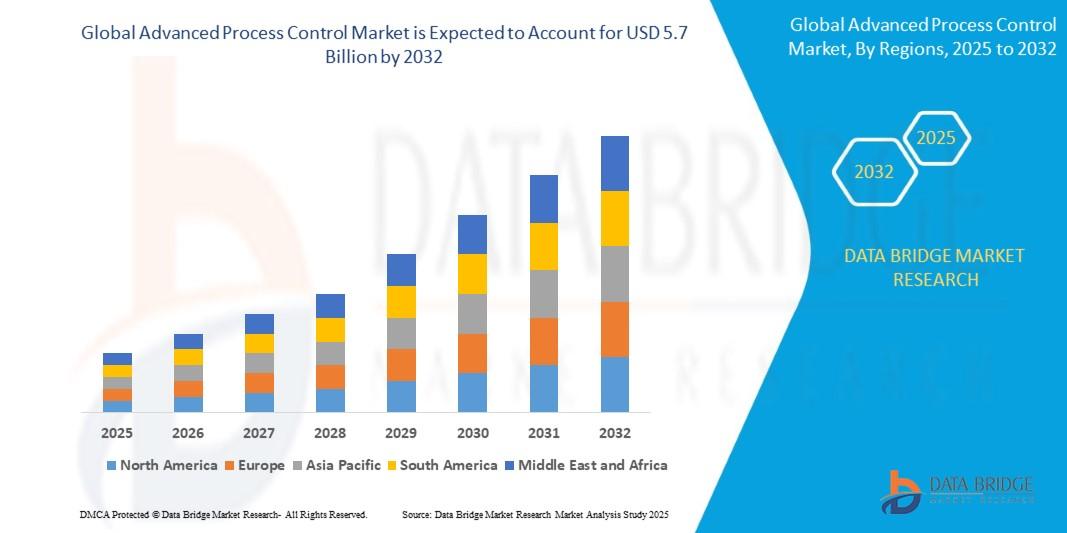
"Executive Summary Advanced Process Control Market Research: Share and Size Intelligence CAGR Value The Global Advanced Process Control Market was valued at USD 2.9 billion in 2024 and is projected to reach USD 5.7 billion by 2032, growing at a CAGR of 10.13% during the forecast period. The large scale Advanced Process Control Market report gives...
As per MarkNtel Advisors The Puerto Rico OTR Tire Market size was valued at around USD 42.13 Million in 2024 and is expected to reach USD 72.43 Million in 2030. Along with this, the market is estimated to grow at a CAGR of around 9.16% during the forecast period, i.e., 2025-30. Puerto Rico OTR Tire Market Systems Market Outlook: The Russian Seed Market is rapidly...

The food and drink sector responds in real time to changing consumer requirements and innovations in sourcing and production, as well as new methods of delivery. It comes to be defined by new cultural shifts, technological advances, global economics, and all food choices offered to users. The CAGR is 5.1%, with an estimated value of $17,577.1 Million, together with a transformative way...