 oXoo AI
Call Center AI Market Positioned for Significant Gains Through 2034
Market Summary
The call center AI market is rapidly redefining the way organizations deliver customer service by embedding artificial intelligence technologies into contact center operations. As customer expectations evolve toward faster, more personalized, and always-available support, businesses are increasingly turning to AI-powered solutions to enhance efficiency and consistency across service channels. Call center AI encompasses a broad set of capabilities, including intelligent virtual assistants, speech recognition, sentiment analysis, and real-time agent support, all designed to elevate both customer and agent experiences.
The global call center AI market revenue was valued at USD 1.87 billion in 2024 and is anticipated to grow at a CAGR of 24.0% during the forecast period.
At the center of this transformation is the need to manage rising interaction volumes while maintaining service quality. AI-driven platforms help organizations automate routine inquiries, guide agents through complex interactions, and generate insights from large volumes of customer data. By augmenting human agents rather than replacing them, call center AI enables contact centers to operate more strategically, focusing human effort on high-value and emotionally nuanced interactions. As digital engagement becomes central to brand perception, AI-enabled customer support is emerging as a competitive differentiator across industries.
𝐃𝐨𝐰𝐧𝐥𝐨𝐚𝐝 𝐅𝐫𝐞𝐞 𝐒𝐚𝐦𝐩𝐥𝐞 𝐑𝐞𝐩𝐨𝐫𝐭 👉
https://www.polarismarketresearch.com/industry-analysis/call-center-ai-market/request-for-sample
Key Market Growth Drivers
The growing emphasis on customer experience is a primary driver of call center AI adoption. Consumers expect timely, accurate, and personalized responses across multiple channels, including voice, chat, and messaging platforms. AI-based contact center solutions enable businesses to deliver consistent service by understanding customer intent, language, and context in real time. This aligns customer interactions more closely with individual needs and improves satisfaction.
Rising operational complexity is another important growth factor. As contact centers support an expanding array of products, services, and digital touchpoints, managing knowledge and workflows manually becomes inefficient. AI-powered agent assist tools provide real-time recommendations, automated call summaries, and next-best-action guidance, allowing agents to resolve interactions more quickly and accurately. This reduces handling time and helps organizations maintain service levels during demand fluctuations.
Market Challenges
Despite strong momentum, the call center AI market faces several challenges that can affect adoption and effectiveness. Data privacy and security are critical concerns, as contact centers process sensitive personal and transactional information. Ensuring compliance with data protection regulations and managing consent across multiple channels requires robust governance and transparent data handling practices.
Another challenge is integration complexity. Many organizations operate legacy contact center infrastructure that was not designed to support advanced AI workloads. Integrating intelligent automation with existing systems such as customer relationship management platforms and telephony solutions can be technically demanding and resource-intensive. Without clear implementation strategies, organizations risk fragmented deployments that limit overall value.
Accuracy and trust in AI-driven interactions remain ongoing considerations. While AI has improved significantly, misunderstanding customer intent or context can lead to frustration if not carefully managed. Organizations must strike the right balance between automation and human intervention, ensuring smooth escalation paths when interactions become complex or emotionally sensitive.
Change management also presents hurdles. Introducing AI into call centers can raise concerns among agents about job security and role changes. Successful adoption depends on clear communication, training, and positioning AI as a tool that empowers agents rather than replaces them. Cultural acceptance and skills development are essential components of long-term success.
Access The Press Release:
https://www.polarismarketresearch.com/press-releases/call-center-ai-market
Regional Analysis
Regional adoption patterns reflect differences in digital maturity, customer expectations, and labor market dynamics. In developed regions, call center AI adoption is driven by the need to enhance customer experience and reduce operational costs. Organizations in these markets focus on advanced conversational interfaces, real-time analytics, and omnichannel orchestration. AI is often deployed as part of broader digital transformation initiatives that span marketing, sales, and service functions.
In emerging regions, growth is shaped by expanding consumer markets and increasing digital engagement. Cloud-based call center AI platforms enable organizations to scale customer support rapidly without heavy infrastructure investments. These regions often prioritize multilingual support, automation of high-volume interactions, and flexible deployment models to serve diverse populations.
Globally, remote and hybrid work models are influencing regional strategies. Distributed contact center workforces rely heavily on AI-driven tools for consistency and performance management. This trend is narrowing the gap between regions, as standardized AI platforms enable best practices to be adopted across geographies.
Browse The Complete Report:
https://www.polarismarketresearch.com/industry-analysis/call-center-ai-market
Key Companies
8x8, Avaya, Artificial Solutions, Avaamo, AWS, Cognigy, Dialpad, Google LLC, IBM Corporation, Microsoft Corporation, Nuance Communications, Oracle Corporation, SAP, Ultimate.ai, Yellow.ai.
Strategic Outlook
Looking ahead, the call center AI market is expected to evolve toward more predictive and proactive engagement models. AI systems will increasingly anticipate customer needs based on historical behavior and contextual signals, enabling outreach before issues escalate. Integration of generative AI with conversational platforms will further enhance natural language interactions and content creation.
The convergence of AI-powered contact center solutions with broader customer experience platforms will create more seamless and personalized journeys. Organizations that invest in ethical AI practices, transparent governance, and continuous model improvement will be best positioned to build trust and scale adoption.
Conclusion
The call center AI market is transforming customer service from a reactive support function into a strategic engagement engine. By combining automation, analytics, and human expertise, AI-driven contact centers deliver faster resolutions, richer insights, and more consistent experiences. While challenges related to data security, integration, and change management remain, ongoing innovation and collaboration are strengthening the market foundation. As conversational AI platforms, speech analytics software, intelligent virtual assistants, and real-time agent assist tools continue to advance, call center AI will play an increasingly vital role in shaping the future of customer engagement.
More Trending Latest Reports By Polaris Market Research:
Categorie
Leggi tutto
Many people choose a Wholesale Portable Scooter because of its ability to fit naturally into various everyday scenes. From intimate home environments to neighborhood outdoor routes and occasional travel arrangements, a portable scooter becomes an extension of personal movement. When exploring different options, individuals often focus on portability, responsible design choices, and how...

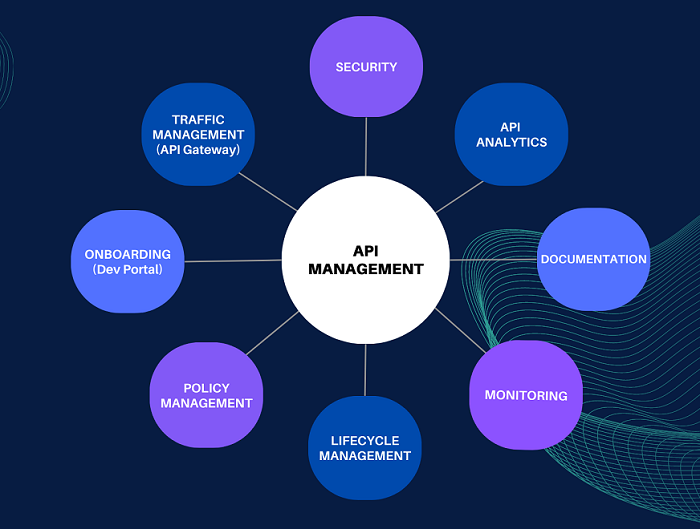
The exceptional and sustained API Management Market Growth is being fueled by a set of powerful and irreversible catalysts that have positioned APIs as the central nervous system of modern business. In today's interconnected world, the ability to securely share data and functionality is not just a technical requirement but a strategic imperative for innovation and growth. API...
Busbar Systems Market - The Busbar Systems Market focuses on the design, production, and application of conductive metal strips used to distribute electricity efficiently in industrial, commercial, and residential settings. Rising demand for compact and energy-efficient power distribution solutions is driving significant global growth in this market. The Busbar Systems Market encompasses the...

The AI in Defense Logistics Market is witnessing a revolutionary transformation as artificial intelligence (AI) reshapes the way global defense organizations manage their supply chains, operations, and resource deployment. This market, valued at USD 2.8 billion in 2024, is projected to grow at a CAGR of 17.5% between 2025 and 2032, driven by the increasing adoption of automation, real-time...

Introduction The global depyrogenated sterile empty vials market has witnessed steady growth in recent years, driven primarily by the increasing demand in pharmaceutical, biotechnology, and healthcare sectors. Depyrogenated sterile empty vials are critical containers used for the storage and transportation of injectable drugs, vaccines, and other sterile formulations. These vials...