oXoo AI
Asia-Pacific Recycled Plastic Market: Driving the Circular Economy Forward (Forecast to 2030)
The Asia-Pacific Recycled Plastic Market is experiencing a seismic shift, propelled by aggressive governmental regulations, rising consumer sustainability demands, and critical technological advancements.
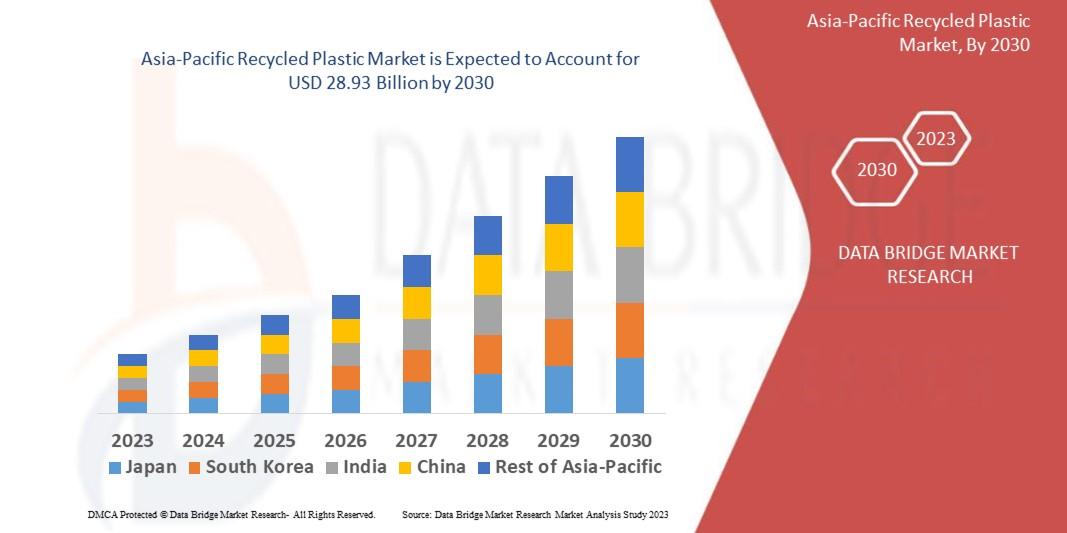
Data Bridge Market Research analyses that the Asia Pacific Protective Films Market which was USD 16.97 billion 2022, would rocket up to USD 28.93 billion by 2030, and is expected to undergo a CAGR of 6.9% during the forecast period of 2023 to 2030.
The market is positioned as a global leader in the transition toward a circular economy.
Based on recent market research and demand analysis, the Asia-Pacific Recycled Plastic Market size was valued at approximately USD 24.80 billion in 2023 and is projected to reach over USD 48.00 billion by 2030. This exponential growth is underpinned by a robust Compound Annual Growth Rate (CAGR) of around 9.9% during the forecast period (2024–2030). Major opportunities lie in scaling advanced recycling technologies and meeting the burgeoning demand for recycled Polyethylene Terephthalate (rPET) and recycled Polypropylene (rPP) in high-volume industries like packaging and automotive. Key industry drivers include the enormous plastic waste generation in rapidly industrializing nations and the implementation of Extended Producer Responsibility (EPR) laws across the region.
Market Overview
The Asia-Pacific region dominates the global recycled plastics market, accounting for a significant market share due to its massive population, rapid urbanization, and status as a major manufacturing and consumption hub. The sheer volume of post-consumer plastic waste generated across countries like China, India, and Southeast Asia necessitates advanced and scalable plastic recycling solutions. The imperative to mitigate marine plastic pollution and reduce reliance on virgin plastics is a powerful catalyst driving the market's trajectory, transforming plastic waste management into a high-growth industrial sector.
Market Size & Market Share Analysis
The sustained growth trends confirm the Asia-Pacific region as the primary engine for the global recycled plastic sector. The estimated market value surge from 2023 to 2030 highlights strong investor confidence and increased capacity expansion by key market players.
Key factors contributing to this dominant market share include:
-
High Waste Volume: Unprecedented levels of plastic waste generation provide a vast feedstock for recycling operations.
-
Regulatory Momentum: Governments are setting ambitious recycling targets and implementing mandates for recycled content in new products, directly stimulating demand analysis and market growth.
-
Cost Competitiveness: The region's operational efficiencies, including comparatively lower labor costs, contribute to making recycled polymers an increasingly viable alternative to virgin resin, despite fluctuations in crude oil prices.
Growth Trends & Key Market Drivers
The market's high CAGR is fueled by a convergence of environmental, regulatory, and commercial factors.
Download now:
https://www.databridgemarketresearch.com/reports/asia-pacific-recycled-plastic-market
Stricter Government Regulations and EPR Schemes
Stringent policies are perhaps the single most important market driver. Countries like Japan and South Korea have mature recycling infrastructures, while emerging economies like India, Indonesia, and Vietnam are rapidly implementing EPR laws that mandate minimum recycled content requirements for consumer goods, particularly in packaging. This regulatory push creates guaranteed, long-term demand for high-quality post-consumer recycled (PCR) materials.
Increasing Corporate Sustainability Commitments
Major multinational corporations (MNCs) and Fast-Moving Consumer Goods (FMCG) brands operating in the Asia-Pacific are setting public, aggressive targets for achieving circular economy goals, often requiring their packaging to contain significant percentages of recycled plastics. This corporate demand analysis directly influences the supply chain, fostering partnerships and joint ventures with regional recyclers.
Technological Advancements in Recycling Processes
Innovation in both mechanical recycling and chemical/advanced recycling is boosting the quality and potential applications of recycled plastic. Advanced sorting technologies like AI-enabled optical sorters are improving material recovery rates, while chemical recycling is unlocking the value of mixed, contaminated, or hard-to-recycle plastic waste streams, providing polymers suitable for food-grade packaging and high-specification applications.
Segment Analysis (by Type, Application, and Process)
In-depth segment insights reveal where the most significant growth trends are occurring within the market.
By Polymer Type (Type Insight)
Polyethylene Terephthalate (PET) is the dominant segment by revenue, driven by the massive consumption of bottled beverages. The rPET segment exhibits one of the fastest growth rates due to high consumer awareness and the ease of bottle-to-bottle recycling. The Polypropylene (PP) segment, however, is projected for substantial growth, especially in non-food packaging and automotive applications, as advanced recycling improves the quality of rPP.
By End-Use Application (Application Insight)
The Packaging industry holds the largest market share, fueled by brand mandates for sustainable packaging. The Building & Construction segment is the fastest-growing application, with recycled plastic being increasingly used in insulation, pipes, decking, and structural lumber, aligning with the "green building" movement across China and India. The Automotive sector is also seeing rising demand analysis for recycled polymers in non-critical components to meet vehicle lightweighting and sustainability goals.
By Recycling Process (Process Insight)
Mechanical recycling currently commands the highest market share due to its maturity and lower operational cost. However, chemical recycling—including pyrolysis and depolymerization—is projected to witness the highest CAGR over the forecast period. This is because it provides a pathway to high-purity, virgin-like recycled resin, addressing the quality and safety concerns for sensitive applications like food-contact materials.
Download now:
https://www.databridgemarketresearch.com/reports/asia-pacific-recycled-plastic-market
Competitive Landscape & Key Players
The Asia-Pacific Recycled Plastic Market is moderately concentrated, featuring a blend of global giants and strong regional specialists. The competitive landscape is defined by strategic investments in capacity expansion and technology acquisition.
Key Players in the region, such as Indorama Ventures, Veolia, SUEZ, and specialized local entities like Banyan Nation (India) and Lucro (India), are constantly innovating.
-
Strategy Focus: Market leaders are pursuing vertical integration, securing feedstock supply through partnerships with waste management firms, and investing heavily in advanced mechanical and chemical recycling facilities to guarantee high-quality, traceable PCR material.
-
Product Development: There is a clear shift toward producing specialty recycled polymers (e.g., rHDPE, rPP, and rABS) tailored for specific end-user specifications, particularly in the automotive and electronics sectors.
-
Expansions & Partnerships: Numerous cross-border investments and strategic alliances are being formed between global chemical companies and regional recycling specialists to build high-capacity plants in high-waste-generating countries like Indonesia, Thailand, and India, further consolidating their market share.
Regional Insights
While this analysis focuses on the broader Asia-Pacific region, performance varies significantly by country, contributing to the overall market share and growth trends.
| Country/Region | Key Market Driver | Market Share & Growth Commentary |
| China | Massive industrial demand and technological innovation (AI sorting) | Holds a dominant market share in both consumption and processing capacity. Focus on closed-loop systems. |
| India | Rapid urbanization, huge waste volume, and new EPR legislation | Exhibits the highest projected CAGR due to low base and massive growth potential across all end-use applications. |
| Japan & South Korea | Mature collection infrastructure and high-tech advanced recycling adoption | Focus on high-value applications and pioneering chemical recycling pathways. Strong government targets. |
| Southeast Asia (ASEAN) | High rates of plastic leakage, driving international investment and new EPR laws | Emerging high-growth countries (Vietnam, Indonesia, Thailand) with significant opportunities in rPET and packaging demand. |
Future Outlook & Forecast to 2030
The Asia-Pacific Recycled Plastic Market is poised for exceptional growth, continuing to outpace the global average. The forecast to 2030 indicates that the market is transitioning from niche environmental compliance to a core, indispensable component of the industrial materials supply chain. The trajectory is defined by two major opportunities: the commercial viability of chemical recycling for high-specification products and the widespread adoption of recycled content mandates in emerging economies. The commitment to a circular economy, backed by supportive policies and robust demand analysis from major corporations, ensures the continued success and expansion of the recycled plastic sector well beyond 2030. The market will see higher capacity utilization, improved quality standards, and a significant reduction in the cost-performance gap between virgin and recycled polymers.
Browse More Reports:
Global Hybrid Imaging Market
Global Indirect Debris Removal Market
Global Integrated Labelling System Market
Global Low Emission Vehicles Market
Global Metal Carboxylate Market
Global Microcontroller for Parking Assist System Market
Global Micro-Perforated Food Packaging Market
Global Mortuary Equipment Market
Global Non-volatile Memory Express Market
Global Obesity Treatment Market
Global Ophthalmic Packaging Market
Global Organic Asphalt Modifiers Market
Global Printed Tape Market
Global Propionic Acid for Animal Feed Market
Global Rear Electric Axle (E-Axle) Market
About Data Bridge Market Research:
An absolute way to forecast what the future holds is to comprehend the trend today!
Data Bridge Market Research set forth itself as an unconventional and neoteric market research and consulting firm with an unparalleled level of resilience and integrated approaches. We are determined to unearth the best market opportunities and foster efficient information for your business to thrive in the market. Data Bridge endeavors to provide appropriate solutions to the complex business challenges and initiates an effortless decision-making process. Data Bridge is an aftermath of sheer wisdom and experience which was formulated and framed in the year 2015 in Pune.
Contact Us:
Data Bridge Market Research
US: +1 614 591 3140
UK: +44 845 154 9652
APAC : +653 1251 975
Email:- corporatesales@databridgemarketresearch.com
"
FAQ: People Also Ask About the Asia-Pacific Recycled Plastic Market
1. What is the projected Asia-Pacific Recycled Plastic Market size by 2030?
The market size is projected to reach over USD 48.00 billion by 2030, reflecting a high volume and value expansion driven by regulatory and consumer demand analysis.
2. What is the key CAGR driving the market growth?
The market is anticipated to grow at a strong Compound Annual Growth Rate (CAGR) of approximately 9.9% from 2024 to 2030, making it one of the fastest-growing regions globally.
3. Which country holds the largest market share in Asia-Pacific?
China currently holds the largest market share in terms of both production and consumption capacity, though countries like India are forecast to register the highest CAGR growth in the coming years.
4. What are the primary growth factors for the recycled plastic market?
Key growth factors include stringent government regulations (like EPR laws and mandatory recycled content targets), rising consumer environmental awareness, and the rapid adoption of chemical recycling technologies.
5. Which plastic type is the dominant segment?
Polyethylene Terephthalate (PET) is the largest segment by revenue, driven by its high collection and recycling rates, particularly for rPET in the booming beverage and packaging industries.
6. Who are the leading key players in the competitive landscape?
Major key players in the competitive landscape include global leaders with significant regional operations like Indorama Ventures, Veolia, and SUEZ, alongside strong domestic players focused on localized recycling infrastructure.
7. Which end-use industry contributes most to the demand for recycled plastic?
The Packaging industry accounts for the largest market share in terms-of-volume consumption, followed closely by the rapidly expanding Building & Construction and Automotive sectors.
Categorias
Leia mais
"Detailed Analysis of Executive Summary Fish Protein Hydrolysate Market Size and Share Data Bridge Market Research analyses that the global fish protein hydrolysate market which was USD 254.75 million in 2022, is expected to reach USD 359.76 million by 2030, and is expected to undergo a CAGR of 4.4% during the forecast period from 2023-2030. When market research report is brilliant...
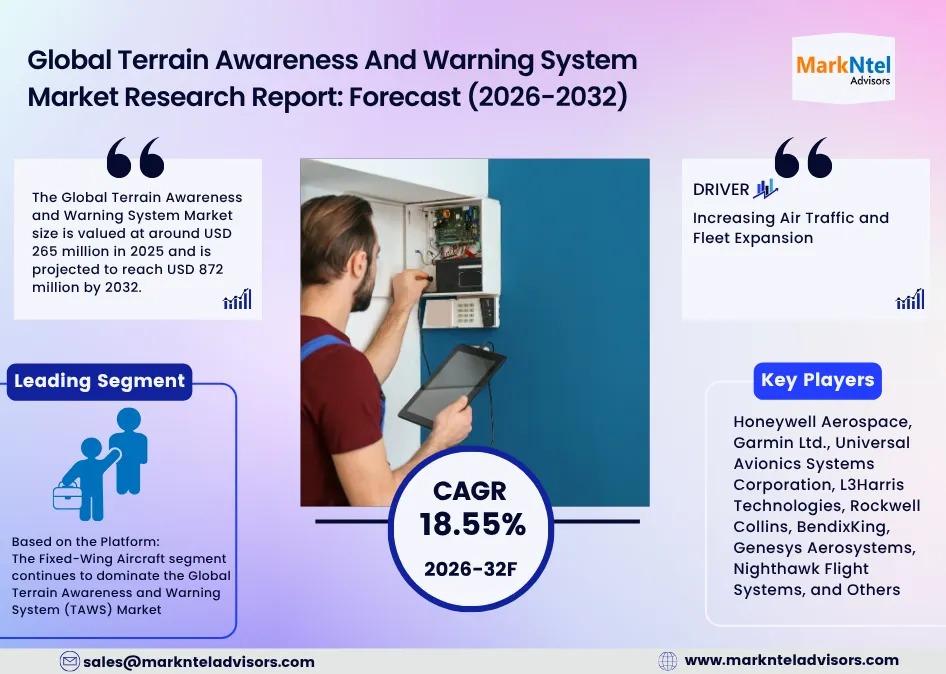
According to MarkNtel Advisors study The Global Terrain Awareness and Warning System Market size is valued at around USD 265 million in 2025 and is projected to reach USD 872 million by 2032. Along with this, the market is estimated to grow at a CAGR of around 18.55% during the forecast period, i.e., 2026-32. Download a FREE PDF Sample of the Report: -...
The global textile industry is increasingly prioritizing eco-friendly materials, with cellulosic fibers becoming a key component in sustainable fabric production. These fibers, derived from natural cellulose sources, offer biodegradable, renewable, and environmentally safe alternatives to synthetic fibers, making them attractive for apparel, home textiles, and industrial fabrics....

Polaris Market Research has introduced the latest market research report titled Osmometers Market Size, Share, Trends, Industry Analysis Report: By Type (Freezing Point Osmometers, Vapor Pressure Osmometers, and Membrane Osmometers), Sampling Capacity, End User, and Region (North America, Europe, Asia Pacific, Latin America, and Middle East & Africa) – Market Forecast,...
"Executive Summary: Crashworthy Aircraft Seats Market Size and Share by Application & Industry The global crashworthy aircraft market size was valued at USD 1.02 billion in 2024 and is expected to reach USD 1.51 billion by 2032, at a CAGR of 5.00% during the forecast period. A worldwide Crashworthy Aircraft Seats Market report comprises of the most recent...