oXoo AI
Organic Bedding Market Scope: Growth, Share, Value, Size, and Analysis
Introduction
The Global Organic Bedding Market has grown significantly in recent years, driven by a rising preference for eco-friendly, chemical-free, and sustainable home products. Organic bedding refers to mattresses, sheets, pillows, blankets, and other bedding accessories produced using natural, certified organic materials such as organic cotton, bamboo, hemp, wool, and natural latex. These products are manufactured without synthetic pesticides, harmful chemicals, or toxins — making them healthier for consumers and safer for the environment.
The increasing awareness toward wellness, sleep quality, and sustainable living has accelerated demand for organic bedding. Consumers around the world are becoming more conscious of the materials that come in contact with their skin every night. As a result, organic bedding has transitioned from a niche product category into a mainstream segment within the global home textiles and lifestyle products market.
Review comprehensive data and projections in our Global Organic Bedding Market report. Download now: https://www.databridgemarketresearch.com/reports/global-organic-bedding-market
Market Dynamics
Market Drivers
Growing Preference for Chemical-Free Bedding
Consumers are increasingly aware of potentially harmful chemicals found in conventional bedding materials, including synthetic dyes, flame retardants, and chemical finishes. Organic bedding, being free from toxins and skin irritants, is considered a safer alternative, especially for children, allergy-prone individuals, and health-conscious households.
Sustainability and Eco-Friendly Living
Global demand for eco-friendly products is rising sharply. Organic bedding aligns perfectly with sustainability goals since it is made using renewable fibers, sustainable farming practices, and biodegradable materials. Environmentally conscious consumers are driving market expansion.
Health and Wellness Trends
The global wellness movement emphasizes better sleep quality and improved lifestyle habits. Organic bedding brands often market their products as breathable, hypoallergenic, moisture-wicking, and temperature-regulating, appealing to consumers seeking healthier sleep environments.
Rise of Premium and Luxury Bedding
Organic bedding has emerged as a premium category within home textiles. Lifestyle-oriented consumers are willing to spend more on natural, luxury bedding products that offer both comfort and peace of mind.
Market Restraints
Higher Cost of Organic Materials
Organic fibers such as organic cotton and natural latex are more expensive to produce due to labor-intensive farming methods and certification processes. This increases the overall price of organic bedding, limiting its adoption among price-sensitive customers.
Limited Raw Material Availability
Certified organic cotton, bamboo, and other natural raw materials have limited supply in several regions. The dependency on specific geographic zones increases production costs and restricts scalability.
Low Awareness in Developing Markets
In many developing countries, consumers still prioritize affordability over eco-friendly benefits. Lack of awareness and limited retail presence hinder market penetration.
Market Opportunities
Boom in Online Retail
E-commerce has revolutionized the bedding industry, allowing direct-to-consumer (D2C) brands to reach global audiences. Online platforms offer wider product visibility, convenient delivery, and easy product customization — boosting organic bedding sales.
Growth of Sustainable Hospitality
Hotels, resorts, eco-lodges, and wellness retreats are increasingly integrating sustainable practices. Organic bedding is becoming a preferred choice for premium and eco-focused hospitality businesses.
Innovation in Natural Fibers
Advancements in organic materials such as bamboo lyocell, hemp blends, and plant-based latex are opening new opportunities for manufacturers to introduce innovative, durable, and premium-quality products.
Rising Disposable Income in Emerging Markets
Urbanization, lifestyle upgrades, and increased spending power in regions such as Asia-Pacific are creating new growth avenues.
Market Segmentation
By Product Type
Organic Mattresses: Natural latex, organic cotton, and wool mattresses dominate the category.
Organic Pillows: Popular due to hypoallergenic properties.
Organic Bed Linens: Sheets, pillowcases, and duvet covers made from organic cotton and bamboo.
Organic Blankets & Duvets: Known for comfort, insulation, and natural thermal regulation.
Mattress Toppers and Protectors: Enhanced comfort products growing in popularity.
Others: Crib bedding, throws, quilts, etc.
By Material
Organic Cotton
The most widely used material in organic bedding due to its softness, durability, and eco-friendly properties.
Organic Wool
Naturally flame-resistant, breathable, and temperature-regulating, making it ideal for eco-friendly mattresses and blankets.
Bamboo
Highly sustainable due to rapid growth, bamboo bedding is known for its silky feel and antimicrobial properties.
Hemp
Strong, durable, and grown with minimal water, hemp is gaining popularity in eco-conscious textile production.
Natural Latex
Derived from rubber trees, natural latex offers exceptional comfort and resilience, supporting the organic mattress category.
By Distribution Channel
Online Retail
A dominant and fast-growing channel driven by convenience and wide product availability.
Specialty Bedding Stores
Preferred by consumers seeking personalized guidance and premium products.
Supermarkets & Hypermarkets
Retail chains offer moderate-priced organic bed linens and accessories.
Brand Outlets
Exclusive stores by premium brands showcase full organic bedding collections.
By End User
Residential: The largest segment, driven by household adoption.
Commercial: Hotels, eco-resorts, wellness retreats, hospitals, and childcare centers adopting organic bedding for comfort, hygiene, and sustainability.
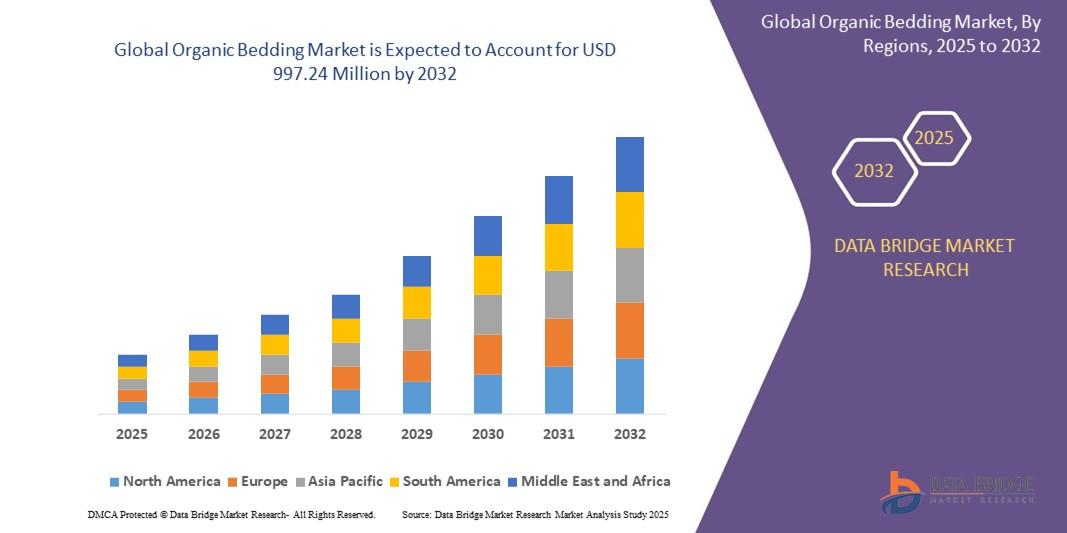
Regional Analysis
North America
One of the largest markets globally, fueled by high awareness, strong consumer spending, and widespread adoption of sustainable lifestyle products. Organic bedding brands enjoy a mature retail ecosystem.
Europe
Europe remains a major hub for organic textiles, with strict sustainability standards and eco-focused consumer behavior. Countries like Germany, the UK, and France show strong demand for premium organic bedding.
Asia-Pacific
The fastest-growing region. Rising incomes, growing urbanization, and increasing exposure to eco-friendly home products are driving market expansion. China and India are major cotton producers, supporting supply growth.
Latin America
Gradual adoption of eco-conscious consumer goods. Urban consumers show rising interest in luxury organic bedding.
Middle East & Africa
Premium hotels, luxury resorts, and high-income households in Gulf nations are fueling demand for organic bedding.
Competitive Landscape
The market consists of both global and regional players competing on sustainability, material quality, certifications, and product innovation. Brands emphasize:
Eco-friendly packaging
Chemical-free manufacturing
GOTS and OEKO-TEX certifications
Investment in natural materials R&D
D2C business models
Product customization
Partnerships with hotels and lifestyle brands
Companies commonly launch luxury organic bedding collections using advanced natural fibers and ethical production practices.
Market Trends & Innovations
Growth in Biodegradable and Sustainable Materials
Manufacturers are exploring plant-based fibers, recycled organic textiles, and biodegradable materials.
Hypoallergenic Bedding Demand
Consumers increasingly demand products that reduce skin irritation and allergies.
Luxury Organic Bedding
Organic bedding is evolving from basic natural products to high-end luxury items featuring premium finishes and elegant designs.
Advances in Natural Fiber Processing
New spinning and weaving technologies improve the softness and durability of materials like bamboo and hemp.
Personalization and Digital Tools
Online shoppers can customize mattress firmness, size, material blends, and bedding colors.
Impact of Sustainability & Certifications
Certifications such as GOTS, OEKO-TEX, Fairtrade, and USDA Organic are crucial in establishing trust. These certifications ensure that materials are organically grown, ethically processed, and free from harmful chemicals. Certified products appeal strongly to informed, sustainability-driven consumers.
Future Outlook
The Global Organic Bedding Market is expected to maintain strong growth over the next decade. As consumers increasingly prioritize health, comfort, and sustainability, organic bedding will become a mainstream preference across households and hospitality sectors.
Technological advancements in textile production and supply chain transparency will further fuel market expansion. The shift toward circular economy practices and environmentally responsible manufacturing will continue to shape product innovation. Emerging economies offer significant opportunities for future growth due to rising disposable incomes and evolving lifestyle trends.
Conclusion
The Global Organic Bedding Market is experiencing robust growth, driven by shifting consumer lifestyles, rising health awareness, and increasing demand for eco-friendly household products. With advancements in organic materials, expanding online retail channels, and growing recognition of sustainable living practices, the market offers strong long-term potential. Businesses that emphasize quality, certifications, ethical sourcing, and innovation are well-positioned to succeed in the evolving organic bedding industry.
Frequently Asked Questions (FAQ)
1. What is organic bedding?
Organic bedding is made from certified organic materials like cotton, bamboo, wool, hemp, or latex, produced without harmful chemicals, pesticides, or synthetic additives.
2. Why is organic bedding becoming popular?
Consumers are seeking healthier sleep environments, sustainable lifestyles, and alternatives to chemically treated bedding.
3. What materials are commonly used in organic bedding?
Organic cotton, bamboo fiber, natural latex, hemp, organic wool, and other plant-based fibers.
4. Is organic bedding hypoallergenic?
Yes, most organic bedding materials are naturally hypoallergenic, reducing the risk of skin irritation and respiratory allergies.
5. How does organic bedding compare to conventional bedding?
Organic bedding is free from chemicals, environmentally sustainable, and generally more breathable and durable, but often more expensive.
6. Who buys organic bedding?
Health-conscious households, eco-friendly consumers, parents of young children, and luxury bedding buyers.
7. What should customers consider before buying organic bedding?
Material type, certifications, thread count, manufacturing standards, and overall comfort.
8. What are the future trends in the organic bedding market?
Increased use of innovative natural fibers, personalized bedding solutions, sustainable packaging, and growth in eco-friendly hospitality sectors.
Browse More Reports:
Global Myxoma Market
Global Nasal Polyposis Drugs Market
Global Needle-Free Injection System Market
Global Ophthalmic Viscosurgical Devices Market
Global Organ Preservation Market
Global Packer Bottles Market
Global Paediatric Hodgkin Lymphoma Market
Global Perfluoropolyether Market
Global Peripartum Cardiomyopathy Market
Global Personal Care Specialty Ingredient Market
Global Pharmaceutical Polymer Vials Market
Global Phthalimide Market
Global Plant-Derived and Synthetic Sugar Market
Global Plastic Antioxidant Market
Global Plastic Jar Packaging Market
About Data Bridge Market Research:
An absolute way to forecast what the future holds is to comprehend the trend today!
Data Bridge Market Research set forth itself as an unconventional and neoteric market research and consulting firm with an unparalleled level of resilience and integrated approaches. We are determined to unearth the best market opportunities and foster efficient information for your business to thrive in the market. Data Bridge endeavors to provide appropriate solutions to the complex business challenges and initiates an effortless decision-making process. Data Bridge is an aftermath of sheer wisdom and experience which was formulated and framed in the year 2015 in Pune.
Contact Us:
Data Bridge Market Research
US: +1 614 591 3140
UK: +44 845 154 9652
APAC : +653 1251 975
Email:- corporatesales@databridgemarketresearch.com
Categorii
Citeste mai mult
The energy sector is a key driver in stimulating world development, bridging economic development with sustainable development. There is no other sector that can operate without stable power, and the sector is unavoidable but very dynamic. Although nations are struggling to find equilibrium between efficiency, accessibility, and sustainability, growth projections point towards equal...

A new growth forecast report titled Automotive Crankshaft Market Size, Share, Trends, Industry Analysis Report By Crankshaft Type (Forged Crankshaft, Cast Crankshaft, Billet Crankshaft), By Material, By Manufacturing Process, By Vehicle Type, By Region – Market Forecast, 2025–2034 introduced by Polaris Market Research represents conclusive data on the overall market. It...
Introduction: Redefining the Art of Travel In a world where convenience and comfort shape our choices, limo services stand out as the ultimate blend of luxury and reliability. Whether you're heading to a corporate event, planning a romantic evening, or organizing transportation for a wedding party, a limousine transforms any ride into a sophisticated experience. With elegance, style, and...

"What’s Fueling Executive Summary Wireless Electric Vehicle (EV) Charging Market Size and Share Growth CAGR Value Data Bridge Market Research analyses that the wireless electric vehicle (EV) charging market, valued at USD 15 million in 2022, will reach USD 437.86 million by 2030, growing at a CAGR of 52.46% during the forecast period of 2023 to 2030. To formulate an...

"Regional Overview of Executive Summary Middle East and Africa Industrial IoT Market by Size and Share CAGR Value Data Bridge Market Research analyses that the Middle East and Africa industrial IoT market are expected to reach USD 26,096.82 million by 2029, at a CAGR of 8.5% during the forecast period. A study about the Middle East and Africa Industrial IoT Market overview is...