 oXoo AI
Food Flavors Market Research Report: Growth, Share, Value, Trends, and Insights
Introduction
The Global Food Flavors Market has emerged as one of the most dynamic segments of the broader food and beverage industry, driven by rapid changes in consumer preferences, evolving culinary cultures, and substantial innovation in product development. Food flavors are essential components that enhance aroma, taste, and sensory appeal across a wide range of food and beverage categories. From everyday snacks and beverages to gourmet products and plant-based dairy alternatives, flavors play a critical role in shaping consumer experiences and influencing purchasing decisions.
Modern consumers are no longer satisfied with generic taste profiles. As global palates expand through increased travel, digital exposure, and the growth of international cuisine, the demand for more diverse, authentic, and unique flavor experiences continues to rise. Moreover, as brands compete in crowded markets, product differentiation through innovative flavors has become a strategic priority. Against this backdrop, the Global Food Flavors Market continues to evolve, driven by natural flavor trends, clean-label expectations, technological advancements, and the rising popularity of functional and health-oriented food products.
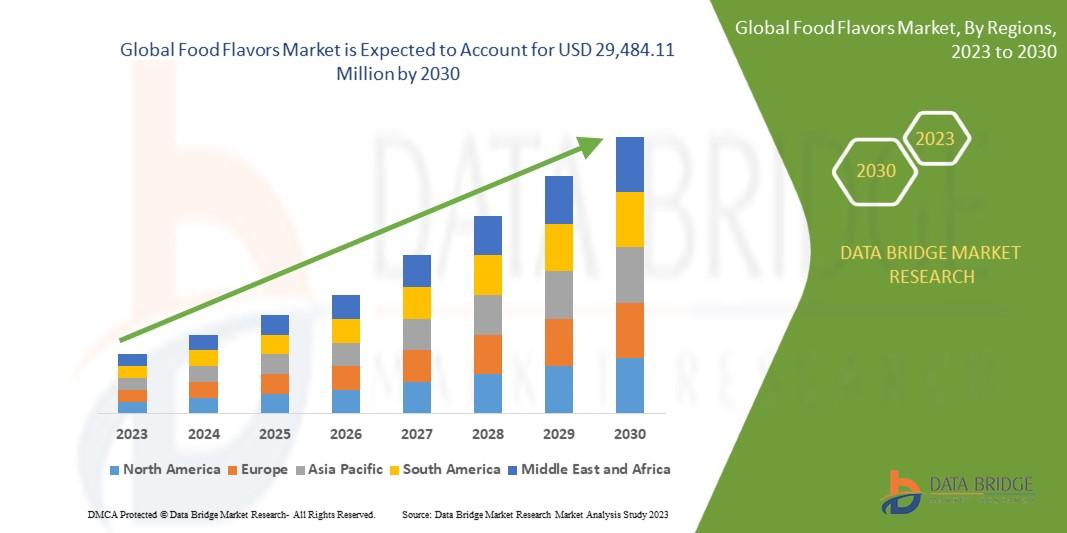
Review comprehensive data and projections in our Global Food Flavors Market report.
Download now: https://www.databridgemarketresearch.com/reports/global-food-flavors-market
Market Overview
The market landscape for food flavors has expanded significantly due to the simultaneous growth of processed foods, beverages, and snacking categories. Manufacturers are continuously upgrading their flavor portfolios to reflect global trends, including authentic regional tastes, seasonal variations, and health-conscious formulations. The market is influenced by several key drivers.
One of the most important growth drivers is the increasing consumption of processed and packaged foods, especially in developing regions. As urbanization accelerates and lifestyles become more hectic, demand grows for convenient, ready-to-eat meals, snacks, and beverages—each of which relies heavily on flavor enhancement. Additionally, the surge in specialty beverages, flavored dairy, artisanal bakery items, and new-age plant-based alternatives is creating fresh opportunities for flavor manufacturers.
However, the market also faces challenges. Regulatory scrutiny around artificial and synthetic additives has intensified, pushing manufacturers to refine formulations and adhere to clean-label standards. The rising cost and limited availability of raw materials for natural flavors pose another concern. Moreover, balancing taste expectations with health considerations—such as reduced sugar, fat, and sodium—requires sophisticated formulation expertise.
Despite these hurdles, opportunities remain abundant. Growing interest in natural, organic, and nature-identical flavors has opened new avenues for innovation. Similarly, emerging markets with evolving food cultures and expanding middle-class populations offer significant growth potential. As consumers gravitate toward experiential eating, brands that craft memorable flavor profiles hold a competitive edge.
Key Market Trends
Several transformative trends are currently shaping the Global Food Flavors Market:
- Shift Toward Natural and Clean-Label Flavors
Consumers are increasingly concerned about product transparency and prefer flavors derived from botanical, fruit, herbal, and spice-based sources. Natural flavors align with the overall clean-label movement, which emphasizes simple, recognizable ingredients. - Rising Demand for Ethnic and Exotic Flavors
As global cuisines gain popularity, demand for flavors inspired by Asian, Middle Eastern, African, and Latin American cultures is growing. Consumers enjoy bold, unique, and authentic tastes that replicate traditional culinary experiences. - Health-Oriented Flavor Development
Manufacturers are developing flavors tailored to reduced-sugar or sugar-free products, low-fat snacks, and functional beverages. There is also a growing emphasis on flavors that signal wellness, such as botanical, floral, and immunity-boosting profiles. - Technological Developments in Flavor Creation
AI and biotechnology are increasingly used to replicate natural tastes, predict sensory outcomes, and shorten development timelines. Fermentation-based flavor production has gained traction due to its sustainability and consistency. - Customization and Regionalization
Personalized flavors and region-specific taste profiles are gaining popularity. Brands are using data analytics to understand local preferences and design targeted flavor solutions for specific demographics.
Market Segmentation Analysis
By Type
Natural Flavors
Natural flavors are derived from plant, animal, or microbial sources and have seen significant demand growth. Consumers perceive them as healthier and safer alternatives to artificial additives. However, natural flavors are more expensive and require careful sourcing, which can affect pricing and supply stability.
Artificial/Synthetic Flavors
These flavors provide consistent taste, higher stability, and cost-effectiveness. Although their usage has declined due to health concerns and regulatory attention, they remain essential in certain categories like confectionery, beverages, and processed snacks where precise flavor replication is necessary.
Nature-Identical Flavors
Nature-identical flavors offer a balance between cost-efficiency and natural-like characteristics. Because they mimic natural flavors using synthetic methods, they are increasingly used in markets where consumers demand natural-tasting products but remain price conscious.
By Application
Beverages
This segment represents one of the largest users of flavor solutions. Fruit-based, citrus, botanical, and fusion flavors drive innovation across soft drinks, energy drinks, flavored water, teas, and functional beverages.
Bakery & Confectionery
Flavors such as vanilla, chocolate, caramel, and fruit derivatives are widely used. The demand for premium, artisanal, and seasonal flavor variations is also rising.
Dairy & Frozen Foods
Flavors in yogurt, ice cream, milk-based beverages, and cheese alternatives emphasize natural, indulgent, and playful profiles. Plant-based dairy substitutes also present significant new opportunities.
Savory & Snacks
Flavors in this segment include spices, herbs, barbecue, umami, cheese, and ethnic profiles. Innovation in baked snacks, extruded goods, and gourmet chips is fueling rapid expansion.
Processed & Packaged Foods
Ready meals, soups, sauces, dressings, and canned foods rely on flavor solutions to enhance taste and compensate for processing losses.
By Form
Liquid Flavors
Liquid flavors are ideal for beverages, dairy, and bakery applications. They offer ease of blending, fast dispersion, and broad compatibility with diverse formulations.
Dry/Powder Flavors
Powdered flavors provide superior stability and longer shelf life. They are widely used in snacks, instant foods, powdered beverages, and packaged goods.
By Region
North America
Mature markets with high demand for clean-label, health-oriented, and premium flavors. Trend-driven categories such as snacking and functional beverages are major contributors.
Europe
Strong preference for natural, organic, and sustainable flavor ingredients. Regulatory frameworks influence product formulation and innovation direction.
Asia-Pacific
One of the fastest-growing regions, driven by urbanization, rising incomes, and diverse culinary heritage. Strong demand for both traditional and global flavors.
Latin America
Growing interest in exotic, spicy, and local fruit flavors. Increasing adoption of processed foods adds momentum to the market.
Middle East & Africa
Growth propelled by expanding food manufacturing infrastructure and rising demand for flavored beverages and packaged foods.
Competitive Landscape
The Global Food Flavors Market is highly competitive and includes multinational giants as well as regional specialists. Larger companies typically leverage advanced R&D capabilities, diversified portfolios, and global distribution networks. They invest heavily in developing natural and sustainable flavors, expanding sensory labs, and introducing innovative solutions aligned with regulatory and consumer expectations.
Regional players also hold significant market share due to their understanding of local tastes and ability to deliver customized flavor profiles. Collaboration between flavor houses and food manufacturers is increasing as companies work together to develop products that resonate with targeted consumer groups.
Sustainability has also become a critical competitive factor. Companies are exploring eco-friendly sourcing strategies, waste reduction practices, and green extraction technologies to strengthen their market position.
Innovation Outlook
Innovation is at the heart of the market’s evolution. Advanced extraction techniques, such as supercritical fluid extraction, are helping manufacturers derive purer and more stable natural flavors. Encapsulation technologies ensure controlled release, better taste retention, and improved heat stability during processing.
Biotechnology and fermentation are being used to create sustainable alternatives to flavors derived from rare ingredients. AI-driven flavor modeling assists formulators in predicting outcomes and reducing trial-and-error cycles. Furthermore, sensory science advancements are helping companies understand consumer perceptions more accurately, enabling the development of better-targeted flavor solutions.
Future Market Opportunities
Looking ahead, the Global Food Flavors Market will continue to benefit from rising demand for plant-based products, personalized nutrition, and premium food experiences. Emerging economies with growing urban populations offer substantial room for expansion. Brands that focus on authentic flavors, sustainability, and wellness-driven innovation are likely to outperform competitors.
Functional foods and beverages present another high-potential area. As consumers prioritize immunity, hydration, mental wellness, and digestion, flavors that align with these benefits—such as botanicals, herbal blends, and fruit infusions—are gaining prominence.
Overall, the future of the market lies in balancing creativity with health, affordability with authenticity, and innovation with sustainability.
Conclusion
The Global Food Flavors Market is undergoing a period of profound transformation. Driven by consumer shifts toward natural ingredients, bold global tastes, and clean-label formulations, the market continues to expand across all major regions and application areas. Technological innovations, flavor customization, and the growing significance of health-oriented food choices are defining the next generation of flavor solutions. With strong future growth prospects, companies in this market are poised to capitalize on emerging opportunities through strategic investments, customer-centric innovation, and sustainable product development.
FAQs
- What are food flavors?
Food flavors are compounds used to enhance or modify the taste and aroma of food and beverages. They improve sensory appeal and help create distinctive product identities. - What is the difference between natural and artificial flavors?
Natural flavors come from plant or animal sources, while artificial flavors are created synthetically to replicate specific tastes. Natural flavors are perceived as healthier, but artificial options offer cost benefits and consistency. - Why is the demand for natural flavors increasing?
Consumers prefer clean-label products with recognizable ingredients. Natural flavors align with health-conscious lifestyles and growing interest in organic and sustainable foods. - Which industries use food flavors the most?
Flavors are widely used in beverages, bakery and confectionery, dairy products, savory snacks, processed foods, and frozen items. - How is technology influencing flavor development?
AI, biotechnology, and fermentation techniques are accelerating innovation by improving flavor accuracy, stability, and sustainability. - What challenges does the Food Flavors Market face?
Key challenges include regulatory restrictions, raw material shortages for natural flavors, and the need to balance taste with health concerns. - Which regions are experiencing high growth in the market?
Asia-Pacific is one of the fastest-growing regions, while North America and Europe remain mature but innovation-driven markets. - What trends are shaping the future of food flavors?
Clean-label formulations, exotic flavors, plant-based alternatives, and functional wellness-oriented tastes are major trends. - Are plant-based foods influencing flavor demand?
Yes, the rise of plant-based foods has created strong demand for dairy-free, meat-free, and vegan-compliant flavor solutions. - What opportunities exist for companies in this market?
Key opportunities lie in natural flavor development, regional flavor customization, sustainable sourcing, and the incorporation of technology-driven solutions.
Browse More Reports:
Global Automotive Connecting Rod Bearing Market
Global Automotive Throttle Position Sensor Market
Global Baby Cribs Market
Global Bambara Beans Market
Global Byler Disease Market
Global Camel Milk Products Market
Global Cathepsin Inhibitors Market
Global Cement Additives Market
Global Chicory Extracts Market
Global Cholesterol Management Devices Market
Global Clinical Risk Grouping Solutions Market
Global Commercial Lighting Market
Global Concentrated Solar Power Market
Global Consignment Software Market
Global Crop Oil Concentrates for Fruits and Vegetables Market
About Data Bridge Market Research:
An absolute way to forecast what the future holds is to comprehend the trend today!
Data Bridge Market Research set forth itself as an unconventional and neoteric market research and consulting firm with an unparalleled level of resilience and integrated approaches. We are determined to unearth the best market opportunities and foster efficient information for your business to thrive in the market. Data Bridge endeavors to provide appropriate solutions to the complex business challenges and initiates an effortless decision-making process. Data Bridge is an aftermath of sheer wisdom and experience which was formulated and framed in the year 2015 in Pune.
Contact Us:
Data Bridge Market Research
US: +1 614 591 3140
UK: +44 845 154 9652
APAC : +653 1251 975
Email:- corporatesales@databridgemarketresearch.com
Categorie
Leggi tutto
Polaris Market Research has published a brand-new report titled Diving Tourism Market Share, Size, Trends, Industry Analysis Report, By Diving Type (Scuba Diving and Free Diving); By Tourist Type; By Age Group; By Gender; By Region, And Segment Forecasts, 2023 - 2032 that includes extensive information and analysis of the industry dynamics. The opportunities and challenges in the...

A new growth forecast report titled Data Center Interconnect Market Share, Size, Trends, & Industry Analysis Report: By End Use (Communication Service Providers, Internet Content Providers/Carrier-Neutral Providers, Government, Enterprises, and Others), By Type, By Application, By Region; Segment Forecast, 2025–2034 introduced by Polaris Market Research represents conclusive...

"Executive Summary Caprylic/Capric Triglycerides Market: Growth Trends and Share Breakdown Data Bridge Market Research analyses that the caprylic/capric triglycerides market which is USD 0.73 billion in 2022, is expected to reach USD 1.2 billion by 2030, at a CAGR of 6% during the forecast period 2023 to 2030. The Caprylic/Capric Triglycerides Market report has been formed with the...
Introduction The India Business Process Outsourcing (BPO) Market has grown into one of the most influential pillars of the global services economy. Over the past two decades, India has emerged as a premier destination for outsourcing due to its skilled workforce, cost advantages, advanced technological infrastructure, and strong government support. As global enterprises continue to...
The food and drink sector responds in real time to changing consumer requirements and innovations in sourcing and production, as well as new methods of delivery. It comes to be defined by new cultural shifts, technological advances, global economics, and all food choices offered to users. The CAGR is 5.0%, with an estimated value of $427.2 Billion, together with a transformative way foods are...