oXoo AI
Expanding Opportunities in Sensor & Switch Housing: Market Growth, Design Trends & Drivers

Growing Importance of Sensor & Switch Housing in Modern Automotive Systems
As per MRFR analysis, the sensor & switch housing market is gaining significant momentum as vehicles become more electronics-driven and safety-focused. These housings play a crucial role in protecting critical components such as pressure sensors, temperature sensors, motion detectors, position switches, and advanced driver assistance system (ADAS) modules. With increasing electrification and automation, manufacturers are pushing toward durable, compact, and thermally efficient housings that safeguard electronic components from heat, moisture, vibrations, and electromagnetic interference.
Sensor & switch housings are now integral to powertrain systems, cabin electronics, lighting modules, battery systems, and infotainment units. They ensure device longevity while enhancing operational accuracy—making them indispensable to automotive, industrial, and consumer electronics applications. As vehicles evolve into intelligent machines, the demand for robust housing materials and next-generation designs continues to rise, boosting market expansion across multiple regions.
Growth Outlook for Sensor & Switch Housing
The sensor & switch housing market is witnessing steady growth due to the rising integration of advanced electronics in both passenger and commercial vehicles. Increased production of EVs, hybrid vehicles, premium cars, and connected vehicles is further strengthening demand. Industries are also adopting automation at a rapid pace, increasing the use of proximity sensors, safety switches, and monitoring systems that require high-performance protective housings.
Manufacturers are shifting toward engineered plastics, lightweight composites, high-grade aluminum, and corrosion-resistant alloys to optimize cost, weight, and efficiency. This material innovation is one of the key factors contributing to sustained industry growth. Additionally, rapid urbanization and industrial automation are supporting the expansion of the global market in the coming years.
Key Market Trends Shaping the Future
1. Miniaturization & Compact Electronics
The push for smaller, more efficient automotive components is driving demand for compact housing designs. Miniaturized sensors require ultra-precise housings with high thermal stability and stronger sealing mechanisms.
2. Adoption of Smart Materials
Materials with enhanced electrical insulation, sustainability benefits, and electromagnetic protection are becoming mainstream. Smart composites and recyclable plastics are gaining popularity to align with green manufacturing trends.
3. Rising Use of ADAS and Autonomous Systems
Lidar, radar, and camera sensors used in ADAS require robust and specialized housings. As autonomous functions expand, more sophisticated enclosures with heat dissipation and structural integrity will be required.
4. Increase in EV-Specific Housing Solutions
EV battery cooling systems, power electronics, and charging modules use specialized sensors—driving adoption of thermally conductive and fire-resistant housings.
Market Drivers Fueling Growth
• Electrification of Vehicles: Growing EV adoption is significantly boosting demand for sensor housings used in battery management, thermal monitoring, and motor control systems.
• Safety Regulations & Compliance: Governments worldwide are tightening vehicle safety norms, driving the integration of more sensors and switches, especially for collision avoidance and driver monitoring.
• Rise of Industrial Automation: Manufacturing, robotics, infrastructure, and process industries rely heavily on environmental and operational sensors, increasing housing demand.
• Technological Advancements: Integration of IoT, AI-driven monitoring, and smart connectivity requires enhanced protection for delicate electronics.
FAQs
1. What materials are commonly used in sensor & switch housings?
Engineered plastics, aluminum alloys, stainless steel, and composite materials are widely used due to their durability, heat resistance, and lightweight properties.
2. Which industries majorly use sensor & switch housings?
Automotive, industrial automation, consumer electronics, aerospace, and medical equipment are the leading end-use industries.
3. How does electrification influence the housing market?
Electrification increases the number of sensors required for battery, motor, and thermal management systems, resulting in higher demand for high-performance housings.
More Related Reports:
Canada Automotive Industry Report Market
Κατηγορίες
Διαβάζω περισσότερα
The Session Border Controller SBC Market Growth is accelerating due to the rising adoption of IP-based communication, VoIP, and unified collaboration platforms. Security, interoperability, and regulatory compliance are major drivers motivating enterprises to invest in SBC solutions. Companies are prioritizing secure communication channels to ensure business continuity and protect...

Polaris Market Research has published a brand-new report titled Salmon Fish Market Share, Size, Trends, Industry Analysis Report, By Species (Atlantic/Aquaculture and Pacific); By Form; By Region; Segment Forecast, 2023 - 2032 that includes extensive information and analysis of the industry dynamics. The opportunities and challenges in the report's dynamical trends might be useful for the...

"Executive Summary Asia-Pacific Corrugated Packaging Market Size and Share Across Top Segments During the forecast period of 2025 to 2032 the market is likely to grow at a CAGR of 6.3%, primarily driven by the advancement in technology Asia-Pacific Corrugated Packaging Market research report comprises of fundamental, secondary and advanced information...

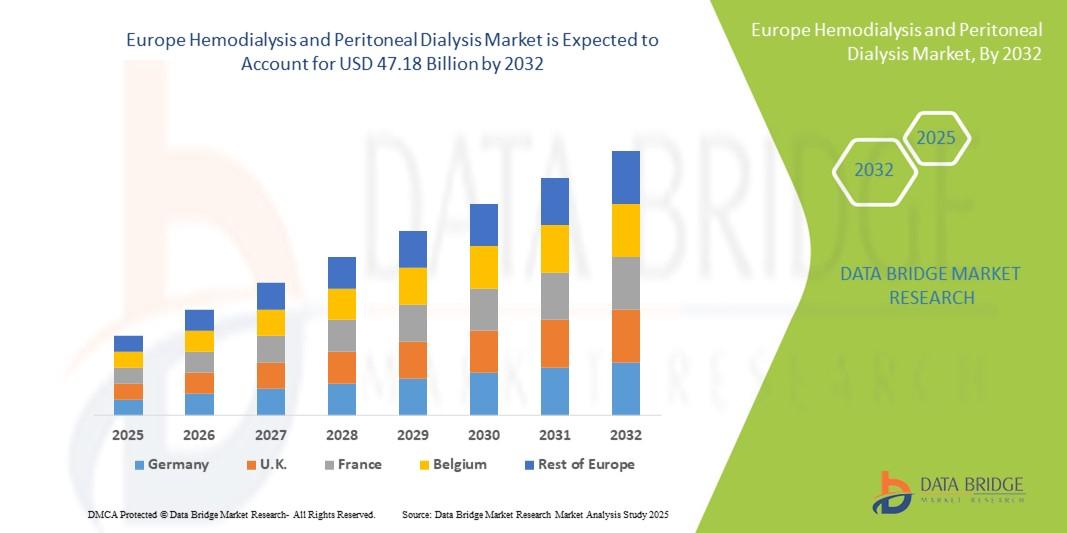
Introduction The Europe hemodialysis and peritoneal dialysis market represents a critical segment within the healthcare industry, addressing the growing burden of chronic kidney disease (CKD) and end-stage renal disease (ESRD). Dialysis, whether performed through hemodialysis or peritoneal dialysis, remains a life-sustaining therapy for millions of patients unable to undergo kidney...
The global Driver Drowsiness Detection Systems Market is witnessing remarkable growth, driven by the increasing need for enhanced road safety and advanced driver assistance technologies. With road accidents due to driver fatigue rising globally, the demand for intelligent systems capable of monitoring driver alertness is becoming a priority for automotive manufacturers and transportation...