 oXoo AI
Exosome Research Products Market Analysis and Future Outlook
A comprehensive evaluation of exosome-based research tools, technologies, and applications shaping scientific and commercial innovation.
Ideal for R&D leaders, investors, and strategic decisioan-makers exploring emerging opportunities across the life sciences industry.
"Get a full overview of market dynamics, forecasts, and trends. Download the complete Display Market report:" https://www.databridgemarketresearch.com/reports/global-exosome-research-products-market
Introduction
The Exosome Research Products Market encompasses a rapidly growing portfolio of tools, reagents, kits, instruments, and services used to isolate, analyze, and characterize exosomes—nano-sized extracellular vesicles secreted by cells. These vesicles have become critical in research areas such as liquid biopsy, targeted therapeutics, regenerative medicine, and advanced diagnostics due to their unique role in cell-to-cell communication.
In today's evolving scientific landscape, exosome-based studies are accelerating discoveries in oncology, neurology, cardiology, and infectious diseases. As life sciences organizations intensify efforts in biomarker development and therapeutic exploration, the demand for standardized, high-quality exosome research tools continues to grow. The scope of this report includes defining market segments, identifying key trends, and outlining the strategic drivers shaping the future of this market for stakeholders and industry participants.
Market Definition and Segmentation
Market Definition
The Exosome Research Products Market includes consumables, kits, instruments, and services specifically designed for exosome isolation, purification, identification, quantification, and functional analysis. These products support research across academic institutions, biotechnology companies, diagnostics developers, and pharmaceutical organizations.
Market Segmentation
1. By Product Type
Isolation and Purification Kits: Precipitation-based kits, size-exclusion chromatography consumables, and immunoaffinity capture kits.
Reagents and Consumables: Antibodies for surface markers (CD9, CD63, CD81), labeling reagents, RNA extraction kits, and cell culture materials.
Instruments: Nanoparticle tracking analysis (NTA) systems, tunable resistive pulse sensing devices, exosome-compatible flow cytometers, and microfluidic isolation platforms.
Software and Analytical Tools: Digital platforms supporting exosome quantification, image analysis, and data interpretation.
2. By Application
Biomarker Discovery (e.g., cancer, neurodegenerative diseases)
Drug Delivery Research (exosome-based therapeutic carriers)
Diagnostics Development (minimally invasive liquid biopsy tools)
Regenerative Medicine (cell-free therapeutic approaches)
3. By End User
Academic research institutions
Biotechnology companies
Pharmaceutical companies
Diagnostic laboratories
Contract research organizations (CROs)
4. By Geography
North America
Europe
Asia-Pacific
Middle East & Africa
South America
Market Dynamics
Drivers
Growing interest in liquid biopsy diagnostics: Exosomes carry disease-specific biomarkers, making them critical in non-invasive diagnostic development.
Rising investment in exosome-based therapeutics: Many biotech companies are exploring exosomes as natural drug delivery vectors due to their biocompatibility.
Advancements in isolation and analytical technologies: Automated systems and microfluidic platforms are enabling higher precision and reproducibility.
Increasing academic research output: Universities and research institutes are significantly expanding projects involving RNA cargo profiling and exosome characterization.
Restraints
Lack of standardized protocols: Variability in isolation methods can affect reproducibility across studies.
High instrument and reagent costs: Premium analytical systems and specialty consumables represent a financial challenge for small laboratories.
Complexity of biological samples: High purity isolation remains technically challenging, especially for clinical-grade applications.
Opportunities
Development of clinical-grade exosome kits: Standardized, regulatory-ready kits offer major commercial potential.
AI-powered data analysis platforms: Machine learning tools can enhance interpretation of exosome cargo for diagnostics.
Growth in regenerative medicine: Exosome-based therapeutics are emerging as an alternative to cell-based treatments.
Challenges
Regulatory barriers: Therapeutic applications of exosomes must meet stringent approval requirements.
Manufacturing scalability: Producing large quantities of exosomes for therapeutic use poses logistical hurdles.
Quality control concerns: Ensuring consistent purity, potency, and identity is essential for translational research.
Market Trends and Innovations
Microfluidic isolation platforms: These devices enable real-time, rapid, and high-precision exosome isolation from complex fluids such as blood and urine.
High-throughput analysis tools: Instruments capable of rapid particle quantification and surface marker profiling are gaining traction in commercial labs.
Multi-omics analysis of exosomes: Integrated workflows for genomic, proteomic, and lipidomic analysis are helping researchers uncover deeper biological insights.
Automated workflow systems: Robotics and automated purification systems are reducing manual labor and minimizing error rates.
Emergence of exosome reference standards: New calibration materials support assay validation and quality assurance.
Competitive Landscape
The competitive environment includes biotechnology suppliers, life science reagent developers, instrument manufacturers, and specialized CROs offering exosome-based services. While the market includes large life science suppliers with comprehensive product portfolios, it also features innovative small and mid-sized companies developing niche technologies such as microfluidic platforms and affinity-based capture systems.
Key Competitive Strategies
Expansion of product portfolios with refined isolation chemistries
Development of integrated software and instrumentation solutions
Collaborations with academic institutions for validation studies
Investments in GMP-compliant manufacturing facilities
Launch of clinical-grade exosome preparation kits
SWOT Overview (Typical Market Players)
Strengths: Strong R&D capabilities, broad distribution networks, established customer relationships.
Weaknesses: High development costs, potential challenges in scaling manufacturing.
Opportunities: Rising demand for clinical-grade reagents, new therapeutic partnerships.
Threats: Rapid technological disruptions, regulatory challenges, increasing competition.
Regional Analysis
North America
Strong research funding, well-established biotech sectors, and rapid adoption of advanced research technologies make North America a key contributor to market growth. The region also benefits from high involvement in biomarker discovery and therapeutic development.
Europe
Europe maintains strong academic research output and a sophisticated regulatory environment. Investments in translational medicine and collaborative research projects support steady market expansion.
Asia-Pacific
Asia-Pacific is emerging as one of the fastest-growing regions, driven by expanding biotechnology sectors, government R&D initiatives, and increasing adoption of diagnostic innovations. Countries such as China, Japan, and South Korea are significant contributors.
Middle East & Africa
Growing investment in healthcare infrastructure and research partnerships is slowly increasing demand for advanced research tools, but adoption remains in early stages.
South America
Brazil and Argentina are key contributors, supported by growing academic research and early adoption of advanced analytical techniques.
Market Forecast (5–10 Years)
Over the next decade, the Exosome Research Products Market is expected to experience strong, sustained growth driven by rising demand for biomarker discovery tools, increased investment in drug delivery research, and expanded interest in cell-free regenerative therapies.
Key growth expectations include:
Significant expansion of reagent and kit-based product lines
Rising adoption of high-resolution analytical instruments
Increased outsourcing to CROs for exosome characterization
Greater focus on producing clinical-grade exosomes
Higher investment in AI-driven exosome analytics platforms
Sustainability trends, digitalization of lab workflows, and scaling of precision medicine initiatives will also shape the industry outlook.
Impact of COVID-19
COVID-19 accelerated the adoption of liquid biopsy technologies and highlighted the need for non-invasive diagnostic methods. This indirectly boosted demand for exosome research tools as researchers explored exosomal markers linked to viral infection and immune response.
Additionally:
Remote and automated laboratory systems gained importance
CRO-based services expanded due to temporary research lab restrictions
Increased public and private R&D funding indirectly supported exosome-related studies
Conclusion
The Exosome Research Products Market is entering a transformative period driven by scientific innovation, growing therapeutic potential, and technological advancements. As academic and industrial research communities expand exploration into exosome biology, demand for robust, standardized, and scalable exosome research tools will rise significantly.
For investors and strategic stakeholders, opportunities exist in automation technologies, clinical-grade reagent production, advanced analytical tools, and partnerships supporting translational research. With rising cross-industry applications, exosomes are poised to become a key pillar of next-generation diagnostics and therapeutics.
FAQ
- What are exosome research products?
They include kits, reagents, instruments, and software used for isolation, detection, and analysis of exosomes. - Which industries use exosome research tools?
Life sciences research, biotech, pharmaceuticals, diagnostics developers, and regenerative medicine organizations. - What is driving growth in this market?
Rising biomarker research, therapeutic exploration, and advancements in analytical technologies. - What challenges do researchers face when working with exosomes?
Reproducibility issues, high instrument costs, and the need for standardized isolation protocols. - Which product category is growing the fastest?
Isolation and purification kits, followed by high-resolution analytical instruments. - How is technology influencing market growth?
Automation, microfluidics, and multi-omics platforms are transforming research efficiency and precision.
About Data Bridge Market Research
An absolute way to forecast what the future holds is to comprehend the trend today!
Data Bridge Market Research set forth itself as an unconventional and neoteric market research and consulting firm with an unparalleled level of resilience and integrated approaches. We are determined to unearth the best market opportunities and foster efficient information for your business to thrive in the market. Data Bridge endeavors to provide appropriate solutions to the complex business challenges and initiates an effortless decision-making process. Data Bridge is an aftermath of sheer wisdom and experience which was formulated and framed in the year 2015 in Pune.
Browse More Reports:
Global Animation Market
Global Medicinal Herbs Market
Global Elderly Care Market
Global Genomics Market
Global Polyethylene Market
Global Transport and Logistics Market
Europe Elderly Care Market
Malaysia Elderly Care Market
Global Leather Goods Market
Global Sulfuric Acid Market
Global Computer Keyboard Market
Global Customer Relationship Management (CRM) Market
Global Caustic Soda Market
Asia-Pacific Elderly Care Market
Global Contact Lenses Market
Contact Us:
Data Bridge Market Research
US: +1 614 591 3140
UK: +44 845 154 9652
APAC: +653 1251 975
Email: corporatesales@databridgemarketresearch.com
Categorie
Leggi tutto
Executive Summary: Smart Refrigerators Market Size and Share by Application & Industry CAGR Value Data Bridge Market Research analyzes that the global smart refrigerators market which was USD 650.23 million in 2022, would rocket up to USD 1069.32 million by 2030 and is expected to undergo a CAGR of 12.0% during the forecast period. The “French Door Refrigerator”...

The Automotive Fleet Leasing Market Analysis is becoming increasingly essential for organizations striving to optimize operational efficiency, reduce ownership risks, and enhance mobility. As businesses evaluate long-term economic advantages, many are turning to fleet leasing as a flexible and cost-effective solution. To understand the evolving dynamics, you can explore the detailed...

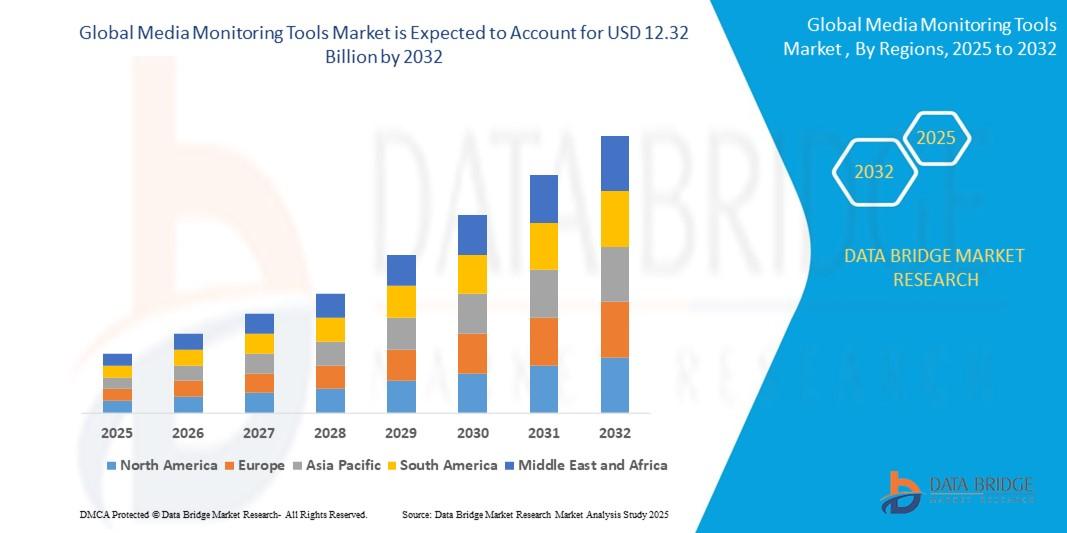
"Global Demand Outlook for Executive Summary Media Monitoring Tools Market Size and Share CAGR Value The global media monitoring tools market was valued at USD 4.42 billion in 2024 and is expected to reach USD 12.32 billion by 2032. During the forecast period of 2025 to 2032 the market is likely to grow at a CAGR of 13.65%, primarily driven by growing need for real-time brand...
Clean Room Air Shower systems from yd-purification provide a highly efficient solution for contamination control, combining airflow management, precision filtration, and operational safety to protect sensitive production and research environments. These systems are critical in laboratories, pharmaceutical manufacturing, semiconductor facilities, and other controlled spaces, ensuring that...

Executive Summary Atrial Flutter Market Size and Share Analysis Report CAGR Value Data Bridge Market Research analyses that the global atrial flutter market which was USD 14,530.00 million in 2022, is expected to reach USD 36,233.52 million by 2030, and is expected to undergo a CAGR of 12.1% during the forecast period of 2023 to 2030. Businesses are very much depending on the diverse...